ART HOTELS IN INDIANAPOLIS
ABOUT US & OUR ARTWORK

ART HOTELS IN INDIANAPOLIS

We were built around a simple idea: art should do more than fill a wall. It should tell a story. At The Alexander, that story starts with Indianapolis and keeps going through the rooms, the halls, and the details guests almost miss the first time. Some pieces make an immediate impression. Others reward a second look. That is usually where it gets interesting.
a person with many pieces of art on their head
The Artwork at the Alexander

Soundsuit | Nick Cave

Originally commissioned through a partnership with the Indianapolis Museum of Art at Newfields, the piece defines the hotel's mission to be a place where art is active rather than decorative. These suits are designed to camouflage the body, masking race, gender, and class to force a visual conversation that requires the viewer’s full attention.

a man and woman sitting at a bar
The Artwork at the Alexander

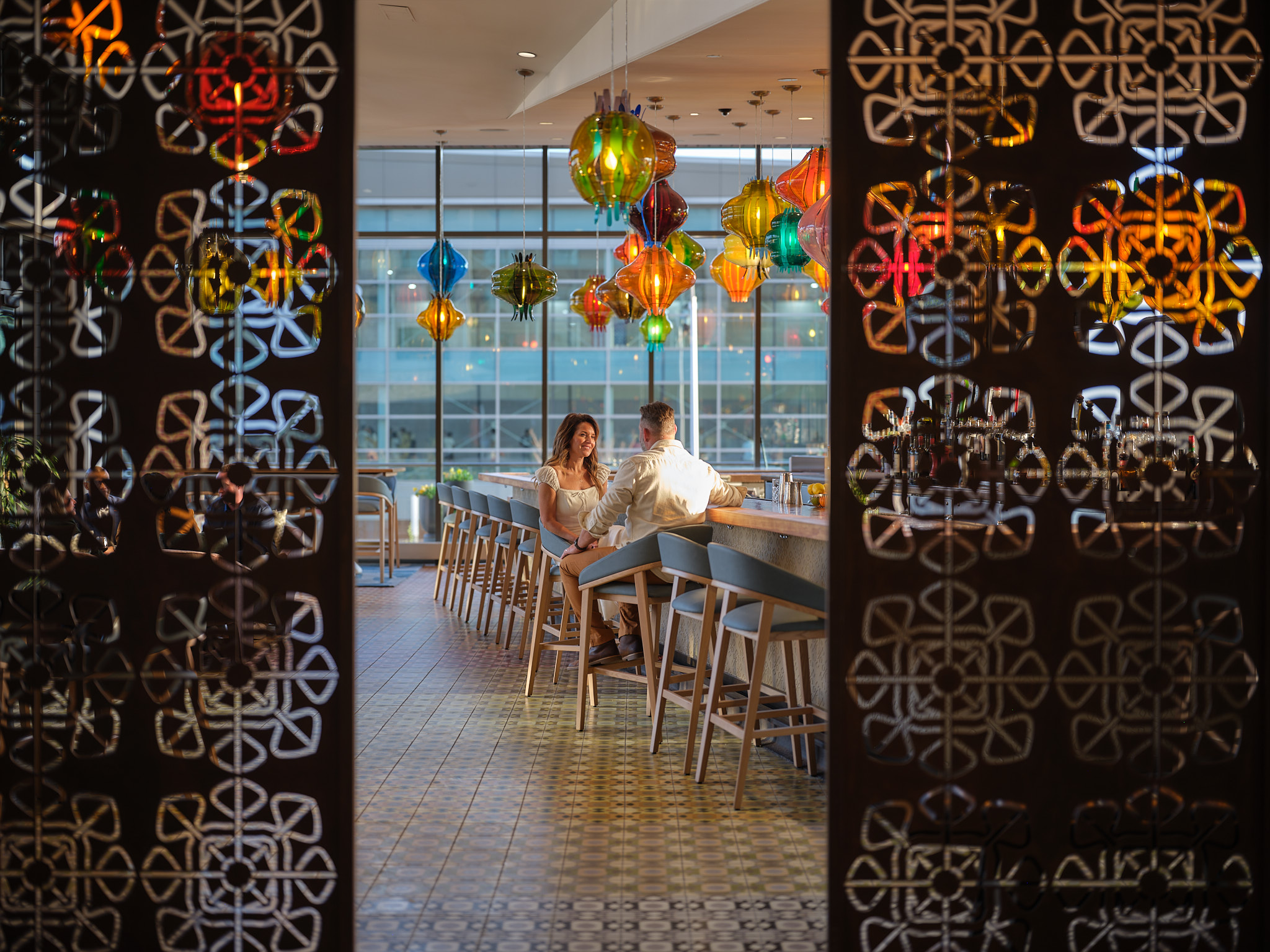
Plat 99 | Jorge Pardo

Designed by Jorge Pardo, Plat 99 is one of the hotel's largest and most interactive works of art. Hand-stamped tiles from Mexico transition from cool to warm tones as you move through the space, while 99 custom acrylic pendant lamps create the lounge's signature glow. An additional 21 lamps illuminate the grand staircase, extending the artwork beyond the bar.

Look closely and you'll also find railroad rails uncovered during the hotel's construction, thoughtfully incorporated into the design. Even the culinary program was created to complement the artistry of the space, making Plat 99 a place where food, cocktails, design, and creativity come together.

a man and woman holding hands looking at a large screen
The Artwork at the Alexander

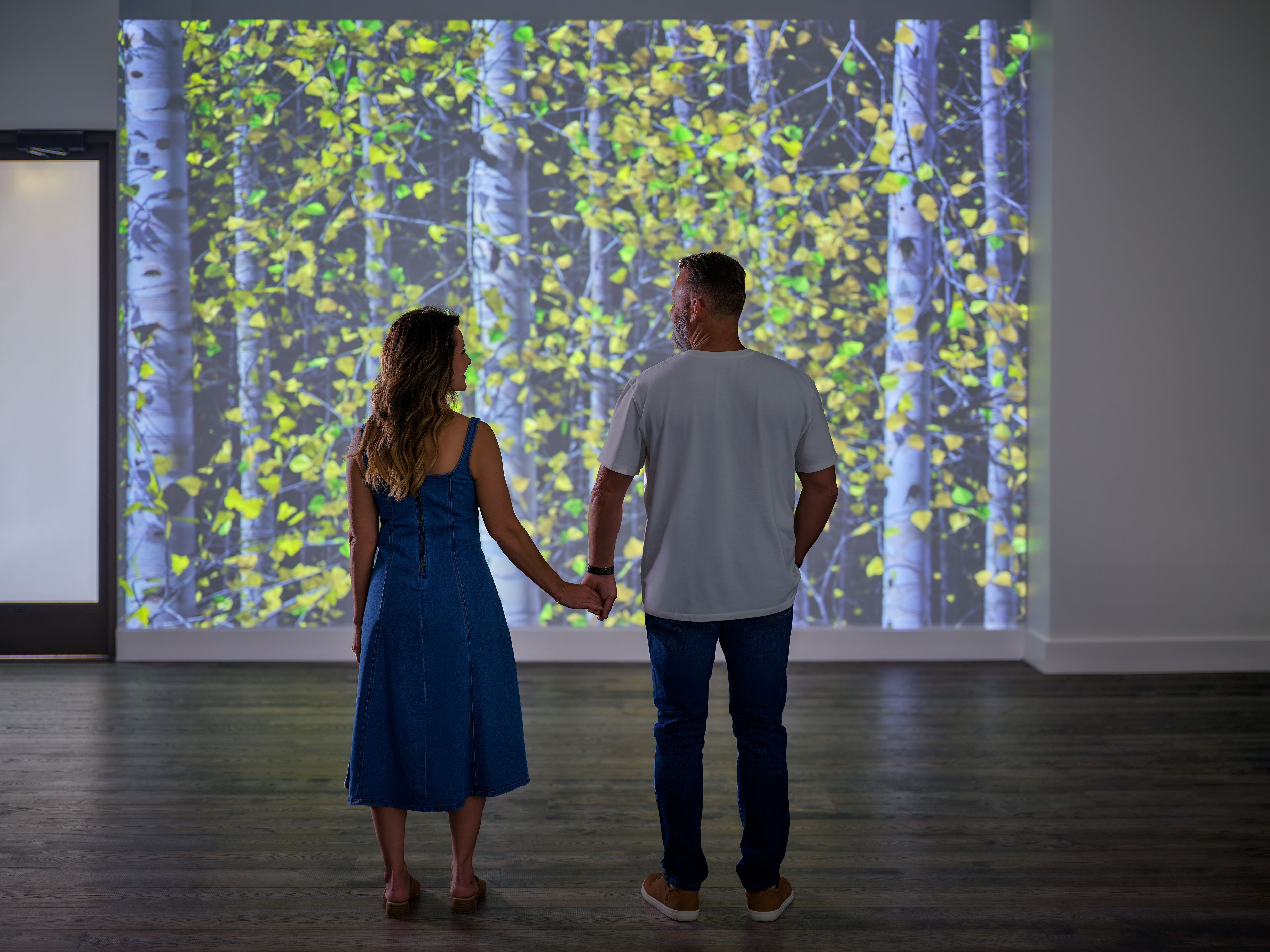
Blind Eye | Jennifer Steinkamp

Blind Eye by Jennifer Steinkamp is the hotel's only true digital artwork, transforming a birch forest through the changing seasons in a continuous, immersive display. Inspired by the eye-shaped knots found on birch trees, the piece invites us to consider how we see the world—and what we sometimes choose to overlook.

As the landscape shifts with time and light, every visit offers a different perspective.

a woman looking at a map
The Artwork at the Alexander

Heartland | Nina Katchadourian

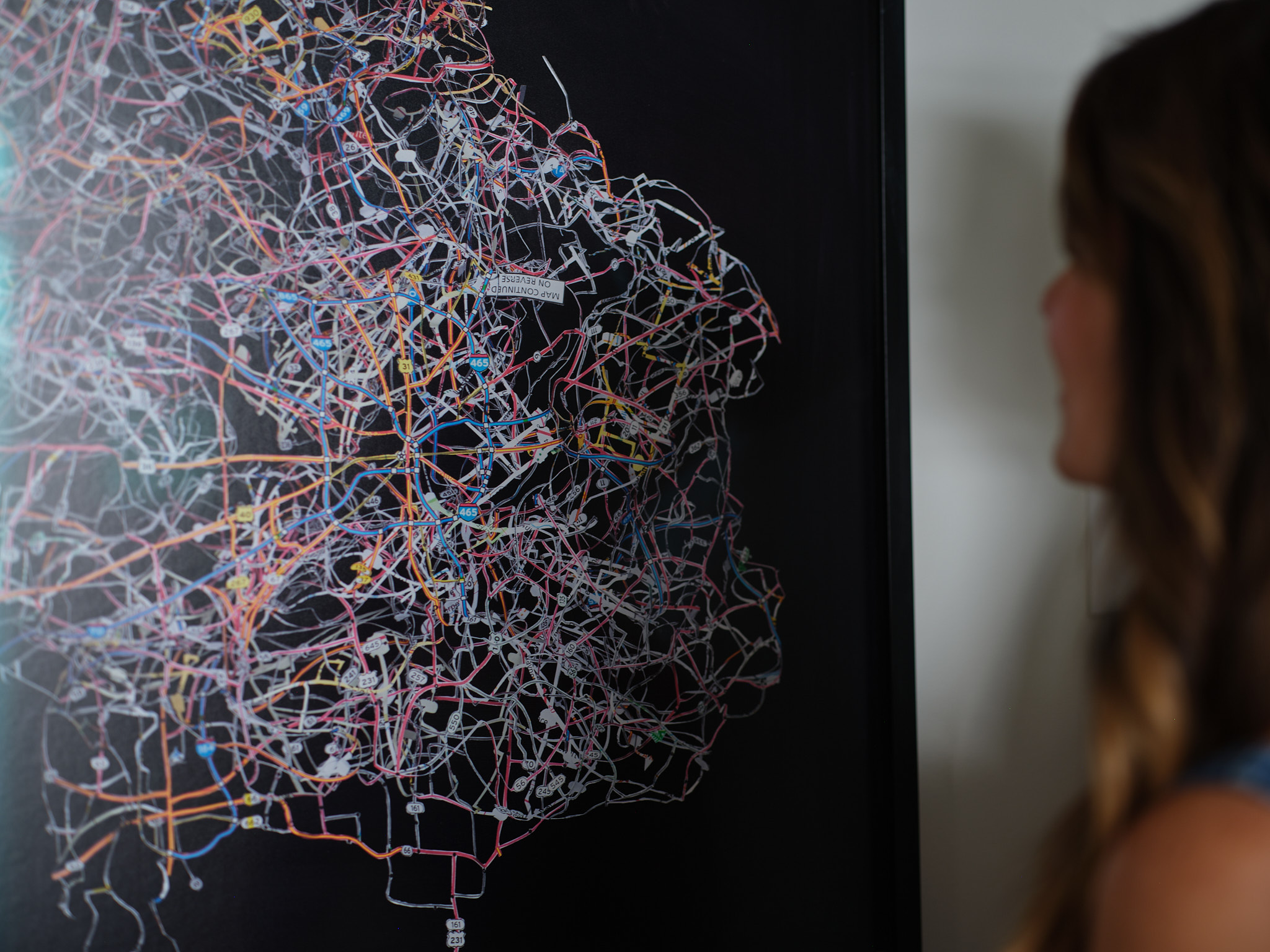
Heartland by Nina Katchadourian transforms ordinary Indiana road maps into an intricate heart-shaped work of art. By carefully cutting away the land and leaving only the roads, the artist creates a delicate network that resembles both a highway system and the veins of the human body.

The piece celebrates Indiana as the "Crossroads of America" while embracing its place in the nation's heartland, turning familiar roads into a powerful symbol of connection.

a room with chairs and a table
The Artwork at the Alexander

Standing Wave | Alyson Shotz

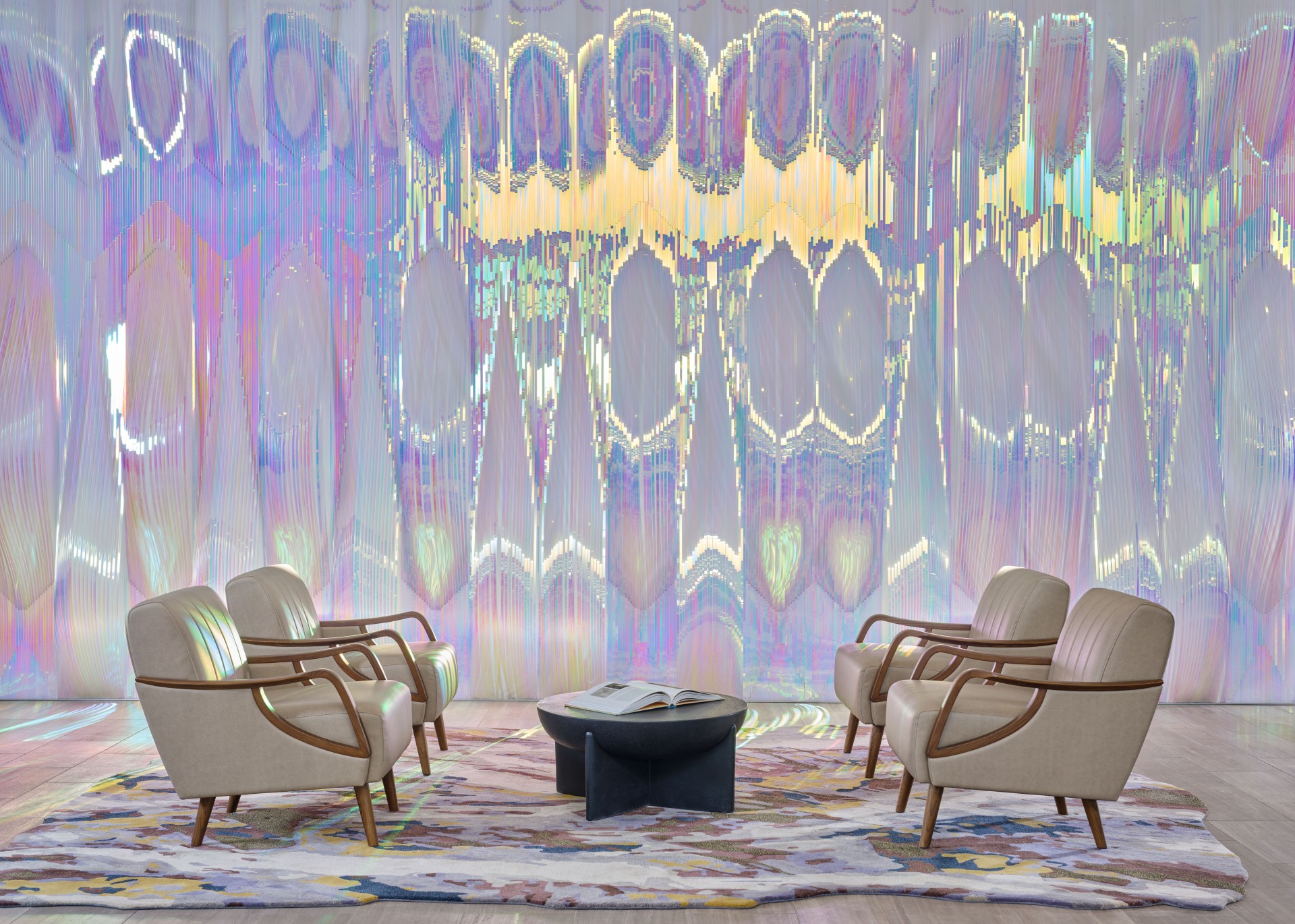
Standing Wave by Alyson Shotz explores the relationship between light, space, and perception through thousands of thin acrylic strips arranged in layered, undulating forms. Inspired by the behavior of light and sound waves, the sculpture gradually curves away from the wall, creating two overlapping waves unique to The Alexander.

Its reflective, dichroic surface transforms throughout the day, shifting in color and appearance as natural light changes and as you move around the piece.

Take a moment to look from different angles and experience how Standing Wave is constantly changing, even while remaining perfectly still.

a room with a wall art and a railing
The Artwork at the Alexander

Dream Queens’ Salon | Guy Goodwin

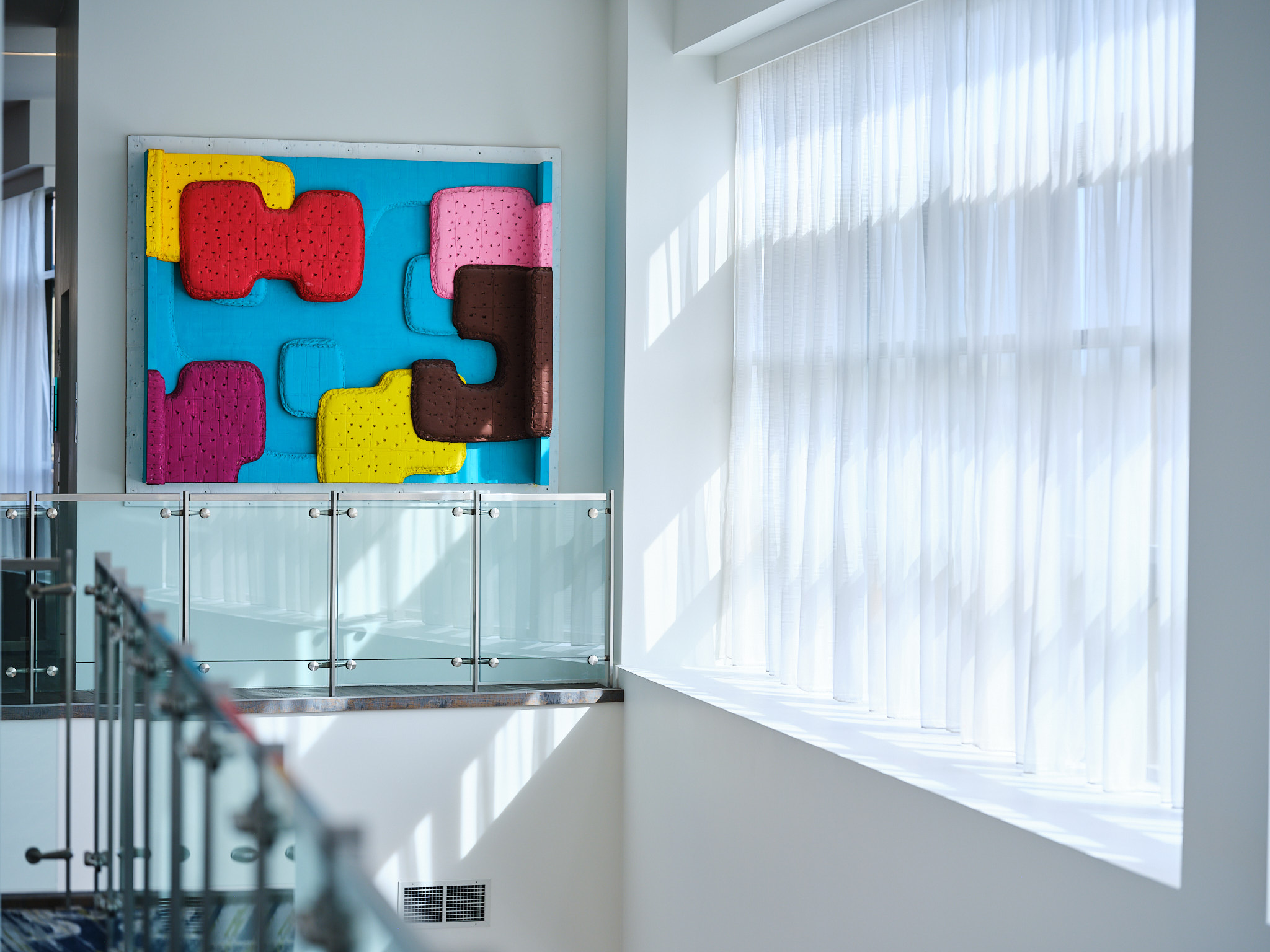
Dream Queens' Salon by Guy Goodwin transforms salvaged cardboard into a bold, layered work that blurs the line between painting, sculpture, and collage. Rather than hiding the construction process, Goodwin leaves staples, screw holes, and other marks visible, celebrating the physical act of making art.

Named after an imagined gathering place, the piece combines vibrant color, depth, and texture to create a space that feels both architectural and deeply personal.

a room with a couch and chairs
The Artwork at the Alexander

Madam C.J. Walker | Sonya Clark

Madam C.J. Walker II is a large-scale portrait of America’s first self-made female millionaire. Composed of 3,840 black plastic combs, the piece honors the entrepreneur who moved her beauty empire to Indianapolis in 1910, attracted by the city’s status as the "Crossroads of America". It is a study of how a visionary promoted herself "on her own ground" despite the social boundaries of her time.

a wall with many birds on it
The Artwork at the Alexander

Anthem | Paul Vilinski

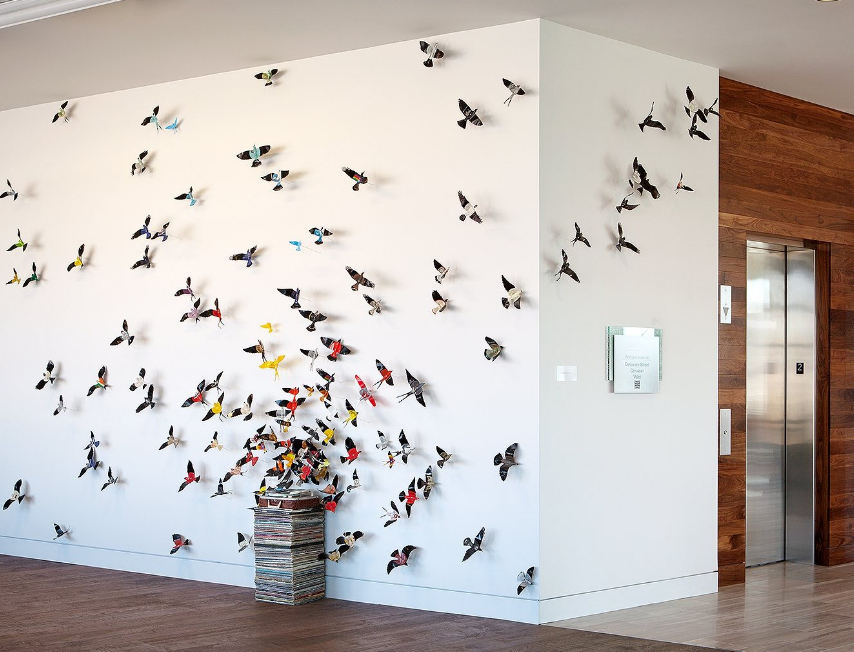
Paul Villinski’s Anthem features a flock of birds taking flight across the wall, each hand-carved from vintage vinyl records. The installation serves as a physical soundtrack, featuring "markers" of life events and odes to Hoosier music—including a Jackson Five LP that pays homage to the family’s Gary, Indiana roots. It is an exploration of how the music we love can be released back into the world as a visual anthem.

THE GRAFFITI AT THE ALEXANDER

Graffiti, With
Better Timing

a room with chairs and a tree stump
Graffiti, With Better Timing

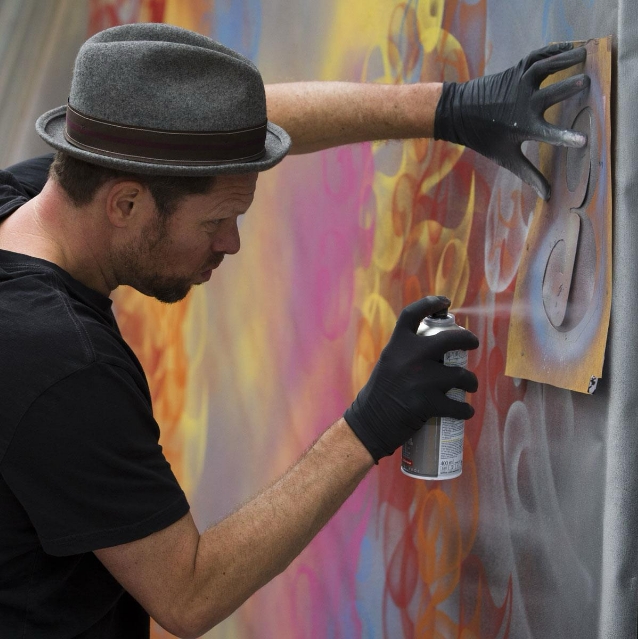
Before you even get upstairs, the art has already started. Nick Walker’s murals run through CityWay’s parking garages, bringing color, wit, and a little mischief to a space that usually asks for none of those things. His recurring “vandal” character appears throughout: part prankster, part English gentleman, always easy to spot once you know to look.

About Nick
Walker
a man wearing a hat and black gloves painting a wall
About Nick Walker

Walker is one of the best-known names to come out of Bristol’s early graffiti scene. His work has appeared in major public and private collections, and his reach extends well beyond the street. Stanley Kubrick commissioned him to recreate New York graffiti for Eyes Wide Shut. Later, his work appeared in the Black Eyed Peas’ “I Gotta Feeling” video. Not bad for someone who made his name with spray paint.

  • WHO IS ALEXANDER RALSTON?

    Who knew a conspiracy would lead to the architecture of Indianapolis? When our city’s architect, Alexander Ralston ventured to the Midwest in the early 1800’s, he was alleged to have been a member of the Burr Conspiracy, which was said to have been a group planning to create an independent nation in the middle of the United States. More than two centuries have passed since he designed the city, yet it still follows his lines.


    Learn More
  • blue skyline of indianapolis in front of buildings

    The Man Behind the City

    Ralston trained under Pierre L’Enfant, the planner behind Washington, D.C. When he helped design Indianapolis, that influence came with him. The city’s layout still reflects it: a central circle, streets radiating outward, a grid that feels deliberate because it was. You can still see that thinking all over downtown. It also shaped our logo.

    a bar with colorful lanterns from the ceiling

    The Story Behind Plat 99

    Plat 99 takes its name from our specific location on Alexander Ralston’s original 1821 city map. Artist Jorge Pardo designed the space as a functional installation, from the hand-painted tiles to the 99 hand-blown glass lamps that anchor the ceiling. Look down at the bar and you'll find a footrail made from reclaimed railroad steel, excavated from the very land the hotel sits on. It is a reminder that while the city above has evolved, the foundation remains exactly where Ralston laid it.

    a building with a view of a city

    A Lasting Legacy

    Ralston’s plan has outlived just about everything built around it. Indianapolis still follows the framework he laid down more than 200 years ago. He is buried at Crown Hill Cemetery, where his gravestone is engraved with the city plat he designed. The story is still here. You just have to know where to look.